Illustration
How Do You Price Emotions?
Valuing emotions, intuition, and years of practice while learning how to price art without losing its heart.

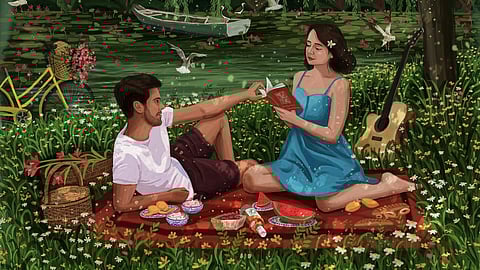

Pricing creativity is never just about numbers. For illustrator Soumyaraj Vishwakarma, whose dreamy depictions of flora and fauna radiate calmness and nostalgia, the challenge has always been putting value on something deeply personal. From early underpaid college projects to collaborations with global brands like Google and Netflix, she has learned that pricing isn’t about attaching a figure to emotions - it’s about protecting her time, energy, and integrity while ensuring fair exchange. In this conversation, she opens up about balancing instinct with structure, navigating guilt, and teaching clients to see the value behind every brushstroke.
We are exploring the complexities of Pricing Creativity, which is one of the trickiest aspects of being a designer or illustrator. How do you assign a price to something that originates from your heart, influenced by memories, emotions, and countless hours of practice?
Pricing is one of the trickiest parts of the creative process. Creative work isn't just about hours or materials - it's about the years of practice behind it, the originality that no one else can bring, and the impact it creates for a client. I still remember my early freelance days in college when I painted a large canvas and was paid only ₹3,000-4,000 for several days of work. I knew I was being underpaid, but I had no idea what the market rates were, so I just accepted it. Deep down, it didn’t feel fair, and that dissatisfaction even reflected in my work later. It took time for me to understand the market and set my own pricing parameters.
Pricing models can be helpful - whether it's project fees, value-based pricing, charging for revisions, or licensing depending on usage—but at the core of it all is knowing your worth. It’s easy to blur personal emotions with professional value, but reminding yourself that you’re charging for the solution makes it easier to say no to low offers. Keeping this philosophy in mind, I collaborated with many brands, including Google, Netflix, The Plated Project, Unilever, Phool, and many more. Ultimately, it's less about putting a price on art and more about ensuring a fair exchange so you can continue creating.
Your illustrations often evoke feelings of calmness, joy, and nostalgia. However, when it's time to provide a quote, you have to assign a monetary value to those emotions. What’s the first thought that comes to your mind in that moment?
For me, finding a balance between viewing art as an emotional expression and as a professional endeavour is essential. I recognise that assigning a price to feelings is deeply personal; however, it also reflects the time and effort I have invested in each project, the years of practice I have accumulated, and the identity I have crafted around my art.
When I provide a quote, I conduct thorough research on the project and engage in detailed discussions with the client about my creative process. This approach helps them understand that they are not merely paying for an illustration; they are also investing in an experience that brings a unique story and sentiment to life.
You’ve spoken about your art being intuitive - beginning with fragments, sketches, or even memories. How do you price something that doesn’t follow a fixed process but instead evolves with your emotions and instincts?
The challenge lies in the fact that there's no precise measure for intuition. For me, determining pricing is based on the scope and value of the work. While my process may be fluid, the final result is tangible for the client. I take into account factors such as the intended use of the artwork, whether it’s for commercial or personal purposes, the realistic hours I will invest, the level of detail in the artwork, and the uniqueness of what I am creating. Although emotions can’t be quantified, the impact of the artwork certainly can be.
Flora and fauna play such a huge role in your work. Do you think clients understand the level of observation, detail, and time it takes to translate nature into something magical on canvas or screen? How do you help them see that value?
Some people do, some don’t. Most of my clients come to me because they admire my vivid artworks and are impressed by the quality of my detailed work. Adding details like grass, leaves, or flowers is a meditative process for me; it takes hours of observation and layering to make it feel alive. I help them see the value by showing progress shots, explaining my process, or even sharing little references from my sketchbook as concept art. Once they see the before and after, they usually understand why it takes time and why it’s priced the way it is.
Many young artists struggle with this: “If my art makes me happy, is it okay to also make money from it?” Did you ever wrestle with this guilt or hesitation? How did you overcome it?
Absolutely, I struggled with this a lot! I used to make portraits of friends and family just for joy - it made them happy, and it made me happy. As my art practice evolved and I found my own style, brands began approaching me, but I hesitated. I wasn’t confident about charging for something that felt so personal. Slowly, as my clients grew and I gained confidence, I realised that the joy art gives me doesn’t cancel out its real-world value. Still, there are times when big brands with big budgets reach out asking me to work for free in the name of ‘exposure’, and I politely decline. The guilt went away when I began to truly value my own effort and art practice.
Let’s talk about the green side of things - not leaves, but money. Do you follow a structure (like per project, per hour, per illustration) or is it more about instinct and client relationships when it comes to pricing?
Yes, I do follow a structured approach. I always start by defining the scope of the project: Is it for personal or commercial use? Will it be reprinted? Is licensing involved? How detailed will the work be?
For smaller projects, I typically charge per illustration, while larger projects are priced with a base rate for both personal and commercial use. The pricing for my illustrations varies based on the specific requirements. For commercial projects where my art is mass-produced, I generally take a revenue percentage, typically around 25–30% from each sale. This model is beneficial for building long-term profits.
In India, the client relationship also plays a significant role. For long-term collaborators, I may be flexible with my rates. However, I adhere to a strict policy of requiring some advance payment, as it’s important to avoid clients who might disappear mid-project. While I do rely on my instincts, I try not to let them undermine the professional structure I have established.
Your work feels very personal, almost like inviting viewers into your memories of nature. Do you ever find it difficult to “commercialise” something that feels so close to your heart?
In the beginning, it was very hard. I was protective of my style and worried about it being copied or generalised. I’ve learned that commercialising doesn’t mean diluting. It just means my personal language of nature is reaching more people, in more contexts. As long as the brief aligns with my style, it still feels authentic. I try to keep a balance - some projects for clients, some purely for myself.
I feel lucky to have worked with people and brands who truly see the value of my art - and sometimes even offer me more than what I quote. This happened when I worked with Netflix on a social media illustration. While discussing the project, I was quite confused about what price to ask. The lady I was speaking with was so kind; she actually helped me arrive at the best quote for my work.
Gen Z creatives often say: “Clients want dreamy illustrations but don’t want to pay dreamy budgets.” Have you faced this? How do you balance staying true to your style while also being practical?
All the time! For me, work satisfaction is a must. As an artist, I don’t like compromising on the quality of what I deliver. I’ve discussed this many times with fellow artists - how do we deal with low-paying versus high-paying projects? The common answer is to show clients the difference in quality they’ll get for a higher fee versus a lower one. And if the client still doesn’t agree, some artists compromise by reducing iterations, offering fewer options, or simplifying the level of detail in lower-paying gigs.
For me, taking that route is challenging. I become deeply passionate about my art, and compromising on quality feels contrary to my work ethic. I balance this by politely declining projects that undervalue my time, while accepting those with smaller budgets where I have greater creative freedom. Ultimately, staying true to my style and protecting my time, energy, and artistic integrity is far more important than saying yes to every opportunity.
The pandemic gave you space to reflect and refine your style. Did it also change how you think about the worth of your work - emotionally, artistically, and financially?
Yes, completely. My artworks are emotive, dreamy and intricate. My illustrations consist of vivid landscapes, of bright flora and fauna. The lockdowns have given me a lot of time to observe my work, explore new mediums and develop my own style. I got time to slow down and realise how much art anchors me emotionally. I’ve also collaborated with NGOs like CRY India free of charge to support their campaigns during this time; it felt like my way of giving back to society.
At the same time, with so many people turning to art and design for comfort - whether through books, prints, or digital campaigns - there was a shift in how society valued creativity. It reminded me that my work isn’t just a “decorative piece”; it carries emotional weight for others, too. That gave me the confidence to price my work more fairly.
What’s one lesson you’ve learned about pricing creative work that you’d pass on to younger illustrators who admire your style but don’t know how to start charging for it?
When I was starting as a fresher straight out of art college, it was very hard to put a price on my work.
I think it’s okay to charge a little less in the beginning when you’re building a strong portfolio and client base - the aim should be to gain trust and confidence in your work. But don’t let people exploit you or your art. Always have clear terms & conditions, and NDA paperwork in place regarding the usage of your work (PS: I learned this the hard way!).
Most of us undercharge in the beginning because we don’t want to scare clients away. But the truth is, people who value your work will pay. And those who don’t, won’t magically start valuing you because you charge less. Try not to set your prices based on how you feel about a piece. It’s easy to get attached when you’ve poured time, effort, and heart into something, but that emotional connection shouldn’t be what decides your pricing. So set your base, be transparent, and remember that pricing is part of teaching people how to respect your craft.
Finally, let’s circle back to the theme. If emotions are priceless, what does it mean to you to price them?
To me, pricing emotions doesn’t mean putting a tag on feelings - it means putting value on the translation of those feelings into something others can experience. The nostalgia and calmness my work carries is my gift, but bringing it into a form someone can live with on their wall, their book, or their campaign - that’s the service. Pricing is simply the bridge that lets emotions travel sustainably, without exhausting the artist. And the most beautiful part is seeing clients’ reactions when I bring their vision alive. That’s when I’m reminded: pricing isn’t final, it grows with your skills, your reputation, and the trust you build.
