Typography
Hot & Wet: When Typography Starts Imagining a Better Climate Future
“Fonts won’t save the world.”
And yet, Hot & Wet makes a compelling case for why typography still matters.

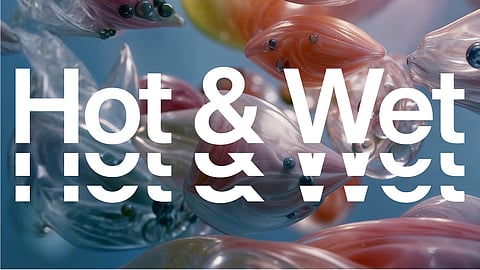

Launched by Monotype in collaboration with Bruce Mau Design, this isn’t just another type release. It’s part of Monotype’s Re: Vision 2025 campaign, an ongoing exploration of how design intersects with the biggest global challenges of our time. And this time, the focus is on climate.
Climate conversations often feel heavy, distant, and overwhelming. Data-driven. Problem-focused. Hard to act on.
Hot & Wet takes a different route.
Led by Monotype’s Executive Creative Director Phil Garnham and developed with Bruce Mau Design, the project asks a simple but powerful question: What if design could help us imagine a better future, before it actually exists?
Because if we can’t picture progress, it becomes harder to work towards it.
At the centre of the project is Climate Chronicle - a microsite that flips the script on how we talk about climate change.
Instead of reporting problems, it presents future headlines.
Stories written as if environmental progress has already happened.
It’s a subtle shift, but a meaningful one.
You’re not reading about what’s going wrong.
You’re experiencing what could go right.
Each headline is paired with practical, sustainable design tips, making the connection between creative decisions and environmental impact more visible and more actionable.
All of this is brought to life using Macklin™ Variable, a typeface superfamily chosen for both expression and efficiency.
With 54 styles built into a single variable system, it allows designers to create visual variety without increasing digital load. Fewer files. Smarter delivery. Lower energy use.
It’s a reminder that sustainability in design isn’t always about big gestures.
Sometimes, it’s about choosing better tools.
And using them with intention.
One of the most compelling ideas behind Hot & Wet is this:
Small technical decisions - like font selection, file size, or system efficiency - can scale into meaningful environmental impact.
Typography may seem like a minor part of the digital ecosystem, but it’s everywhere. Across websites, apps, interfaces, and content systems.
Multiply one mindful choice across millions of touchpoints, and the effect is anything but small.
There’s also an emotional layer to the project.
As Bruce Mau Design points out, we’re surrounded by dystopian climate narratives. Constant exposure to negative futures can lead to fatigue or, worse, inaction.
Hot & Wet counters that by introducing optimism as a design tool.
Not blind positivity, but constructive imagination.
Because if we can’t imagine the future we want, we’re unlikely to build it.
The project doesn’t claim that typography alone can solve the climate crisis.
It doesn’t need to.
What it does instead is reposition design as a catalyst, something that can influence perception, shape narratives, and guide behaviour.
As Phil Garnham puts it, typography is “kilobytes of encoded culture in a world of gigabyte media.” And when used intentionally, it becomes a subtle but powerful climate tool.
