How to Build a Digital Art Practice Without Losing Your Artistic Voice

Traditional skills, curiosity, and intention still matter. Linesh Lee shares how to use digital tools without letting them dilute your voice and why fundamentals are your biggest advantage.
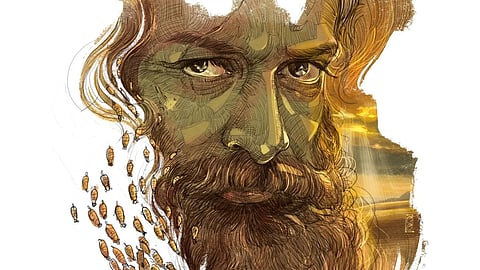
How to Build a Digital Art Practice Without Losing Your Artistic Voice
5 min read
Q

Let’s start at the beginning. Before layers, brushes, and undo buttons - what did drawing mean to you as a kid, and do you still feel that same emotion when you create digitally today?

A

As a child, drawing was an act of pure curiosity and exploration. It wasn’t about the final product; it was about discovering shapes, colours, and emotions on paper. That same sense of wonder continues to inspire me today, even in the digital realm. Tools like Photoshop and Procreate offer new ways to explore, but the joy of creating and experimenting remains the same.

Shobhana
Shobhana
Q

You began with traditional mediums before moving into digital art. Was there a moment when digital felt intimidating or “too perfect”? How did you push past that?

A

At first, working digitally felt almost clinical, with its endless ability to undo actions and create perfect lines. I soon realised that the key was not to avoid imperfection but to embrace it intentionally. By approaching digital tools with the same mindset I had in traditional art, allowing for mistakes, exploring textures, and focusing on emotion - I gradually made the medium my own.

Parandhu pogindren
Parandhu pogindren
A Tribute to Hayao Miyazaki
Q

Many young creatives worry that switching to digital makes their work look generic. Did you ever feel that fear and what helped you retain your personal style?

A

I did. Digital tools can tempt you into relying on shortcuts, filters, or trendy styles. I discovered that grounding myself in the fundamentals of traditional art such as composition, color theory, and personal observation, helped me maintain my unique voice. Style emerges when you infuse your perspective into the tools, rather than allowing the tools to dictate your creativity.

Q

Your traditional training clearly influences your digital work. Which fundamentals (like composition, light, or anatomy) matter most when working digitally?

A

Composition, lighting, and storytelling are the pillars I always return to. Even when working digitally, a piece without solid fundamentals feels hollow. Anatomy and proportion matter too, depending on the subject, but at the core, I focus on visual harmony and emotional impact.

Q

Tools like Procreate and Photoshop offer endless possibilities. How do you decide when to use tools intentionally and when they start distracting from the art itself?

A

I try to let the tool serve the idea, not the other way around. If I notice myself experimenting for the sake of effects rather than concept, I step back. Tools are powerful, but they’re a means to an end your vision should always lead.

Q

Social media often rewards trends over originality. How do you stop yourself from chasing styles that perform well but don’t feel like you?

A

I remind myself that trends are fleeting, but your voice is enduring. I focus on work that excites me personally. When I create for my own curiosity and expression, the work naturally resonates with the right audience.

Padmarajan
Padmarajan
Q

When your work feels stuck or starts looking repetitive, what’s your process for finding your voice again?

A

I return to fundamentals sketching from life, experimenting with new subjects, or revisiting older pieces with fresh eyes. I also allow myself “play” sessions where the goal is curiosity, not a finished piece. That often unlocks new directions.

Chimera Film
Chimera Film
Q

For beginners, digital art can feel overwhelming - brushes, settings, software. What should young artists focus on first instead of trying to learn everything at once?

A

Understand your vision and the fundamentals first. Skills such as composition, colour, and lighting are transferable across mediums. Learn the tools gradually, but don't let settings and brushes define your art; the idea always comes first.

Sreenath Bhasi
Sreenath Bhasi
Q

How important is it to step away from screens and revisit traditional sketching or observation in today’s digital-first world?

A

It is incredibly important to observe real-life light, texture, and movement to ground your digital work in reality. Even a few minutes of traditional sketching can recalibrate your eye and inject authenticity into your digital creations.

Q

You’ve evolved across mediums and tools. How do you know when you’re “experimenting” versus losing direction?

A

Experimentation should feel intentional, even if results are unpredictable. If it becomes purely random or stressful, it’s time to step back. I ask myself “Does this exploration inform my vision?” If yes, I keep going; if not, I refocus on the fundamentals.

Sunflower
Sunflower
Q

What’s one mistake you made early in your digital journey that actually taught you something important about your artistic voice?

A

I used to rely too heavily on filters and effects to complete my pieces. While it made my work look polished, it also felt soulless. This experience taught me that the skillful use of tools is meaningless without emotional intention. Your unique voice matters more than perfection..

Kumbalangi Nights
Kumbalangi Nights
Q

If a young artist feels their work doesn’t stand out yet, what should they work on more - style, skill, or consistency?

A

All three are important, but consistency is the engine that drives growth. Skill develops through practice, and style emerges naturally over time. Show up every day, create deliberately, and your voice will gradually shine through.

Q

Finally, if you could give young creatives one grounding reminder while building a digital practice, what would it be?

A

Remember that tools are just tools. Your curiosity, observation, and emotions are what make your work truly yours. Stay patient, stay curious, and let your passion lead every stroke.

logo
Creative Gaga
www.creativegaga.com