Architecture
A Container Restaurant in Tuticorin, Tamil Nadu
A material-led project by Wallmakers using steel and mud.

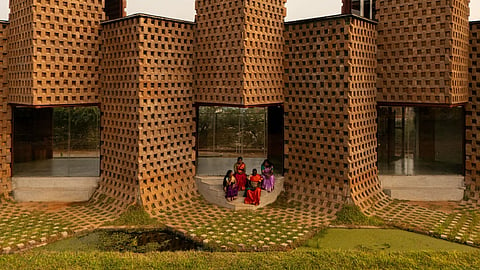

Tuticorin, a port city with over 2000 years of maritime history, has long been shaped by trade and movement. The large number of discarded shipping containers in the city became a starting point for this project, leading to an unusual combination of materials - steel and mud.
The restaurant, designed to seat 200 people, is built on a narrow and linear plot. To work within this constraint, shipping containers are used as the primary structure and placed vertically to achieve better ceiling heights. This approach not only explores modular construction but also allows the design to respond efficiently to the site’s limitations.
Given the hot climate and the openness of the site, a layer of poured earth is added over the containers. This acts as insulation, reducing heat gain and improving thermal comfort inside the building. The combination of steel and earth creates a balance between industrial structure and climatic responsiveness.
The layout is carefully planned to create smaller, more private seating niches within the elongated plan. Despite the compact footprint, each group of users gets a defined space. Natural light enters through skylights during the day, while in the evening, custom chandeliers made from reused wax and pipes provide illumination.
